


Skills of an auto electrician, the industries they support, and the voltage ranges encountered across conventional vehicles, EVs, marine systems, caravans, towing equipment, accessories and solar installations.
Auto Electricians: Certified Skills for Modern Vehicles, Machinery and Mobile Power Systems
Modern vehicles rely on electricity for almost every important function. Starting, charging, lighting, engine management, braking, safety systems, communications, navigation and driver assistance all depend on electrical or electronic components. As vehicles become more technologically advanced, the role of the auto electrician has expanded from repairing simple wiring faults to diagnosing complex computer-controlled systems, high-energy batteries and integrated mobile power installations.
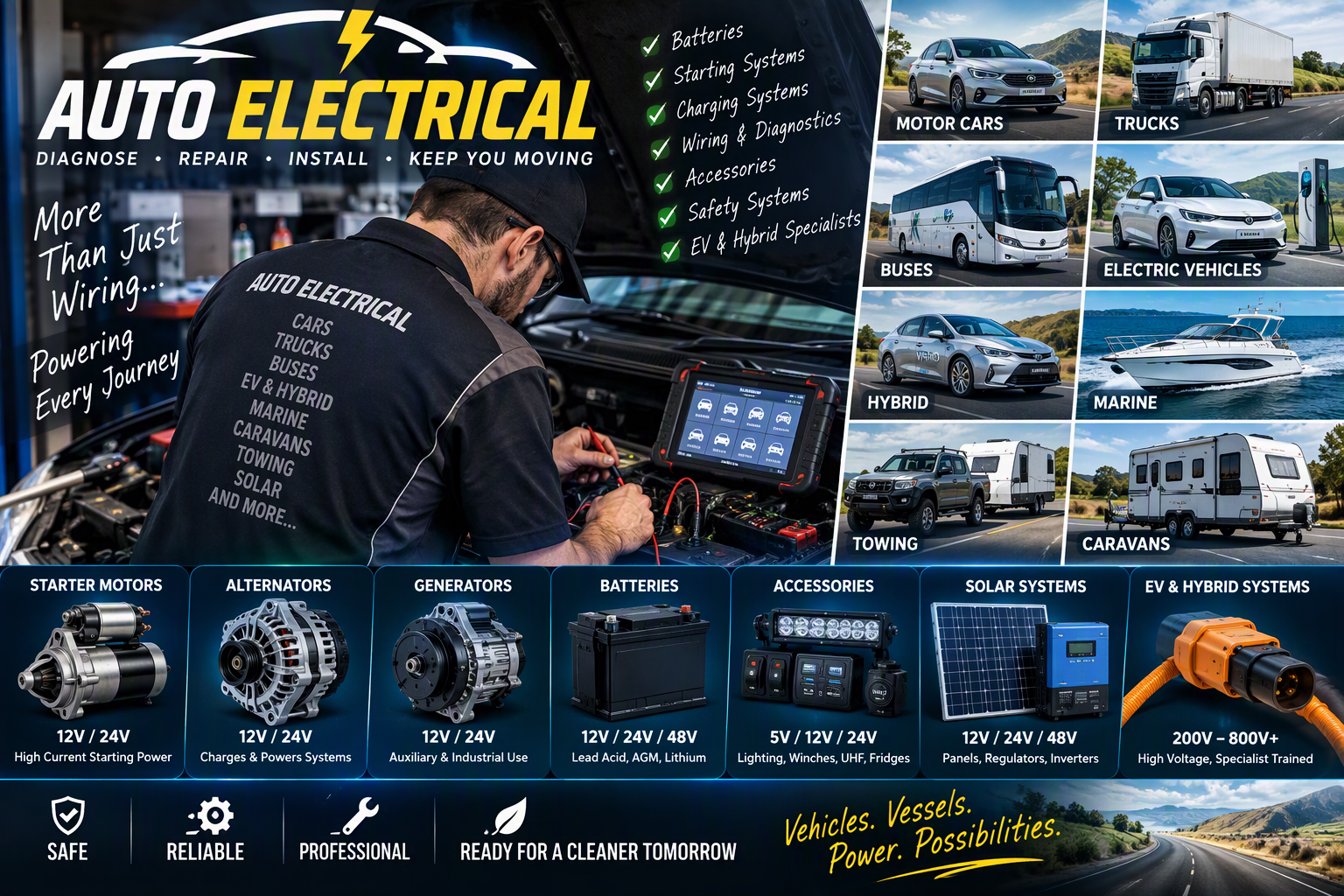
A qualified auto electrician combines traditional trade skills with electronic diagnostics, computerised testing and careful safety procedures. Their work can involve motor cars, trucks, buses, electric and hybrid vehicles, marine craft, towing systems, caravans, recreational vehicles and solar-supported battery systems.
Qualifications and Certified Skills
In Australia, the principal trade qualification is the Certificate III in Automotive Electrical Technology, coded AUR30320. The qualification is designed for people who service, diagnose and repair vehicle electrical systems and components. It contains 21 core units and 11 elective units. [training.gov.au]
Training typically covers:
- Safe automotive workshop practices
- Use and maintenance of electrical test equipment
- Reading wiring diagrams and technical information
- Testing batteries and starting systems
- Diagnosing alternators and charging systems
- Repairing wiring harnesses, connectors and electrical circuits
- Installing lighting, accessories and ancillary equipment
- Diagnosing petrol and diesel engine-management systems
- Testing ignition, instrumentation and warning systems
- Using scan tools and interpreting diagnostic trouble codes
- Inspecting electronic control modules, sensors and actuators
- Soldering, crimping, circuit protection and secure cable routing
The current qualification also includes elective pathways associated with Advanced Driver Assistance Systems, commonly known as ADAS. These systems can include cameras, radar sensors and associated electronic control equipment. [training.gov.au]
TAFE Queensland describes the qualified auto electrician as someone trained to service, diagnose and repair electrical systems, including vehicle lighting, wiring, ignition, instruments and warning systems. Entry-level training can also cover testing and repairing basic circuits, inspecting batteries, installing ancillary systems, repairing looms and servicing starting and charging systems. [tafeqld.edu.au] [Certificat…Queensland]
Diagnostic and Repair Work
An auto electrician does more than replace defective parts. An important part of the trade is identifying the underlying cause of a fault.
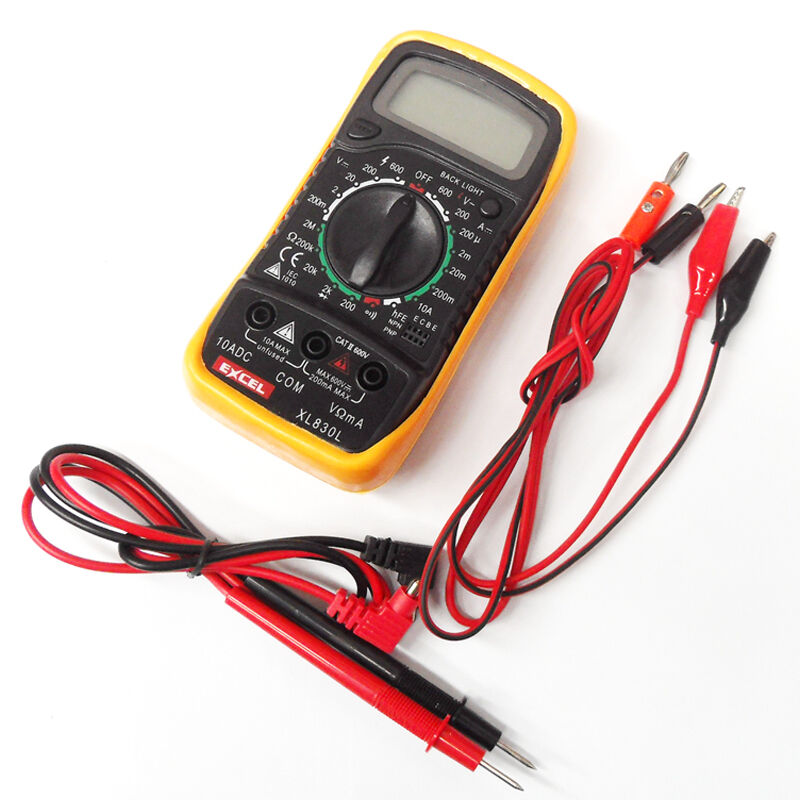
A technician may begin by discussing the symptoms with the vehicle owner, checking service information and inspecting the vehicle. Electrical measurements are then taken with equipment such as multimeters, current clamps, battery analysers, oscilloscopes, insulation testers and computerised scan tools.
Common diagnostic work includes:
- Locating short circuits, open circuits and excessive resistance
- Testing voltage drop across cables, connectors and earth points
- Identifying parasitic battery drain
- Testing battery condition and available cranking capacity
- Measuring starter-motor current
- Checking alternator output and voltage regulation
- Testing network communications between electronic modules
- Diagnosing failed sensors, actuators, relays and control units
- Repairing damaged wiring after corrosion, vibration, heat or collision
- Finding intermittent faults that occur only under particular conditions
Automotive electricians may also test or replace alternators, generators, voltage regulators and starter motors, repair ignition wiring, install electronic equipment and connect powered accessories to the vehicle’s electrical supply. [vetassess.com.au]
Motor Cars and Light Commercial Vehicles
Passenger cars and light commercial vehicles generally use a nominal 12-volt direct-current system. The battery provides high current to the starter motor, while the alternator supplies electricity when the engine is running and replenishes the battery.
Typical work includes:
- Battery, starter-motor and alternator testing
- Lighting and indicator repairs
- Electric window, mirror and seat repairs
- Central locking and security systems
- Engine-management diagnosis
- ABS, traction-control and airbag fault diagnosis
- Instrument-cluster and warning-light repairs
- Reversing cameras, parking sensors and dash cameras
- Trailer-brake controllers and towing connections
- Audio, communications and navigation equipment
- Dual-battery and touring accessory systems
Modern vehicles have numerous electronic control modules connected through communication networks. This means a fault in one component can affect several systems. Accurate diagnosis is therefore essential before parts are replaced.
Trucks, Heavy Vehicles and Buses
Many trucks, buses, coaches and heavy commercial vehicles use nominal 24-volt systems. These are commonly created by connecting two 12-volt batteries in series.
Heavy-vehicle auto electrical work may involve:
- High-capacity starter motors and alternators
- Air-conditioning control systems
- Air-brake warning circuits
- Electronic engine and transmission controls
- Body-control and multiplexed wiring systems
- Fleet tracking and communications equipment
- Refrigeration and auxiliary equipment
- Work lights, beacons and warning systems
- Battery isolators and emergency cut-off systems
- Wheelchair lifts, destination signs and passenger equipment
- Electric retarders and braking-control electronics
- Bus doors, ramps and accessibility systems
Because heavy vehicles often operate for extended periods and may carry passengers or valuable freight, reliability is critical. Electrical installations must be protected from vibration, heat, dust, moisture and high current loads.
Electric and Hybrid Vehicles
Battery electric vehicles, plug-in hybrids and conventional hybrids require additional skills beyond traditional 12-volt automotive work.
Australia has a dedicated Certificate III in Automotive Electric Vehicle Technology, AUR32721. It covers the servicing, diagnosis and repair of battery electric vehicles and includes light-vehicle and heavy-vehicle specialisations. The work is performed in accordance with AS 5732 for electric-vehicle maintenance and repair. [training.gov.au]
EV and hybrid work can include:
- Safely depowering and reinitialising a vehicle
- Inspecting traction batteries and battery enclosures
- Diagnosing battery-management systems
- Testing traction motors and motor-control systems
- Inspecting high-energy cables and connectors
- Diagnosing onboard chargers
- Testing DC-to-DC converters
- Servicing electric air-conditioning compressors
- Checking high-energy interlock and isolation-monitoring circuits
- Inspecting regenerative-braking controls
- Diagnosing thermal-management systems
An EV usually still contains a conventional low-voltage system for lighting, computers, locks and communication equipment. However, propulsion is provided by a separate high-energy traction system.
WorkSafe Queensland warns that EVs present hazards including electric shock, arc flash, fire, explosion, toxic gases, battery electrolyte and thermal runaway. Electric trucks, buses and mining vehicles may operate at higher voltages than electric cars or motorcycles. Work on these systems must only be undertaken by people with the appropriate training, competencies, procedures and protective equipment. [worksafe.qld.gov.au]
Marine Auto Electrical Work
Marine electrical systems are exposed to salt, humidity, vibration and continuous movement. These conditions can quickly damage unsuitable wiring, terminals and connectors.
Marine-related work may include:
- Starting and charging systems
- Outboard and inboard engine wiring
- Bilge pumps and float switches
- Navigation lights
- Marine radios and antennas
- Depth sounders, chart plotters and fish finders
- Battery banks and isolators
- Shore-charging equipment
- Solar charging
- Inverters and DC-to-DC chargers
- Winches, anchor systems and deck lighting
Small boats commonly use 12-volt systems, while larger craft may use 24 or 48 volts for particular equipment. Marine installations require suitable tinned cable, sealed connections, appropriate circuit protection and corrosion-resistant components.
Work involving mains-voltage shore power or fixed 230-volt AC installations may require a separately licensed electrical worker. An automotive or marine electrical qualification should not automatically be treated as authority to perform every category of mains-voltage electrical work.
Towing and Trailer Systems
Towing installations require careful integration between the tow vehicle and trailer. Poorly installed wiring can affect lights, battery charging, braking systems and the vehicle’s electronic modules.
An auto electrician may install or repair:
- Trailer plugs and sockets
- Tail, stop and indicator-light circuits
- Electric trailer-brake controllers
- Anderson-style power connectors
- Reversing-camera connections
- Auxiliary battery-charging circuits
- Breakaway brake systems
- Caravan refrigerator supplies
- Electronic towing modules
- Load-control relays and circuit protection
Modern vehicles may require a dedicated towing module rather than a direct connection to the rear lights. This protects sensitive electronic circuits and allows the vehicle to recognise that a trailer is connected.
Caravans, Camper Trailers and Recreational Vehicles
Caravans and recreational vehicles can contain several interconnected power sources, including the tow vehicle, house batteries, solar panels, mains chargers, inverters and portable generators.
Typical 12, 24 or 48-volt DC work may include:
- House-battery banks
- Interior and exterior lighting
- Water pumps
- Ventilation fans
- Refrigerators and control circuits
- USB and accessory outlets
- Battery monitors
- Solar regulators
- DC-to-DC charging
- Inverters
- Electric awnings and steps
- Breakaway systems
- Towing cameras and communications equipment
The auto electrician must calculate cable size, current demand, fuse or circuit-breaker ratings and expected voltage drop. High-current appliances can perform poorly or become unsafe when connected with undersized cables or unsuitable terminals.
Fixed 230-volt AC wiring, mains sockets, switchboards and some inverter connections must be handled according to the applicable electrical licensing rules. Coordination between an auto electrician and a licensed electrician may therefore be necessary.
Starter Motors, Alternators and Generators
Starter motors
Starter motors operate at the nominal battery-system voltage, commonly:
- 12 volts DC in passenger cars and light vehicles
- 24 volts DC in many trucks, buses and heavy machines
- Other voltages in specialised industrial or military equipment
Although the voltage appears relatively low, a starter motor can draw extremely high current. Poor terminals, corroded earth straps or undersized cables can cause substantial voltage drop, heat and starting failure.
Alternators
An alternator must produce a voltage greater than the battery’s resting voltage to charge it. In conventional systems, typical regulated charging levels are approximately:
- 13.8 to 14.8 volts for many nominal 12-volt systems
- 27.6 to 29.6 volts for many nominal 24-volt systems
These figures are general working ranges only. The correct voltage depends on the vehicle, battery chemistry, temperature and charging strategy. Modern smart alternators may deliberately vary their output under computer control.
Generators
Older vehicles and specialised equipment may use DC generators rather than alternators. Generator systems can be found in classic cars, older machinery, marine applications and some auxiliary-power arrangements.
Testing can include:
- Output-voltage measurement
- Current-output testing
- Regulator inspection
- Belt and pulley inspection
- Wiring and earth testing
- Brush and commutator inspection
Accessories and Auxiliary Power Equipment
Accessories can range from a small USB outlet to a high-current winch or inverter. Typical nominal voltages include:
- 5 volts DC for many USB devices
- 12 volts DC for passenger-vehicle accessories
- 24 volts DC for heavy-vehicle accessories
- 36 or 48 volts DC for specialised equipment and battery banks
- 230 volts AC at an inverter output
Common installations include driving lights, work lights, winches, compressors, refrigerators, radios, UHF equipment, GPS systems, cameras, alarms, tracking units and auxiliary power outlets.
Every accessory installation should consider:
- Maximum operating current
- Start-up or surge current
- Cable length and conductor size
- Voltage drop
- Fuse or circuit-breaker capacity
- Relay or electronic switching requirements
- Battery capacity
- Alternator capability
- Heat, vibration and water exposure
- Safe cable routing and mechanical protection
Solar and Battery Charging Systems
Vehicle, caravan and marine solar systems commonly charge nominal 12, 24 or 48-volt battery banks. The solar-panel voltage is normally higher than the battery voltage so that a regulator can control charging.
For example, one commercially available MPPT solar controller can operate with 12, 24 or 48-volt batteries, accept up to 150 volts open-circuit from the solar array and provide configurable battery-charging voltages. Its default absorption settings include 14.4 volts for a 12-volt bank and 57.6 volts for a 48-volt bank, although the correct settings depend on the battery manufacturer and chemistry. [victronenergy.com]
A solar installation may contain:
- Solar panels
- Series or parallel panel connections
- An MPPT or PWM regulator
- Battery isolators
- Fuses or circuit breakers
- Lead-acid, AGM, gel or lithium batteries
- Battery-management systems
- DC distribution equipment
- Monitoring displays
- Inverters and chargers
A panel described as “12 volt” does not necessarily produce exactly 12 volts. Its operating and open-circuit voltages will usually be higher. The auto electrician must match the panel array, charging regulator and battery bank using the manufacturers’ specifications.
Typical Voltage Ranges at a Glance
| Application | Common nominal voltage or range |
|---|---|
| USB accessories | 5 V DC, with newer standards supporting additional negotiated voltages |
| Passenger vehicles | 12 V DC |
| Trucks and buses | 24 V DC |
| Starter motors | Commonly 12 or 24 V DC |
| Alternator charging | Approximately 13.8 to 14.8 V for 12 V systems |
| Heavy-vehicle charging | Approximately 27.6 to 29.6 V for 24 V systems |
| Caravan house systems | Commonly 12 V, sometimes 24 or 48 V DC |
| Marine systems | Commonly 12 or 24 V, with 48 V used in some applications |
| Solar battery banks | Commonly 12, 24 or 48 V DC |
| Hybrid traction systems | Often above conventional 12 or 24 V vehicle voltage |
| Battery electric vehicle traction systems | Commonly several hundred volts DC, depending on manufacturer and model |
| Inverter output | Commonly 230 V AC in Australia |
These are representative ranges, not universal test specifications. The manufacturer’s service information, wiring diagrams, battery data and component ratings must always be checked before testing, repairing or modifying a system.
It is also important to distinguish automotive terminology from electrical-installation terminology. WorkSafe Queensland defines high voltage in a general electrical-installation context as exceeding 1,000 volts AC or 1,500 volts ripple-free DC. The automotive industry may nevertheless label a traction circuit as “high voltage” at much lower levels because it presents a serious electric-shock and arc hazard. [worksafe.qld.gov.au]
A Trade Connecting Mechanical Systems with Modern Technology
The auto electrician has become one of the most technically diverse tradespeople in the transport industry. Their work connects mechanical equipment, electrical power, electronics, computerised controls and communications networks.
A qualified technician may repair a 12-volt starting system in the morning, diagnose a 24-volt truck-charging fault in the afternoon and inspect an EV isolation fault using specialised equipment later in the day. The same foundation skills can also support marine equipment, caravans, towing systems, auxiliary batteries and solar-powered mobile installations.
As transport continues to adopt electrification, connected technology and renewable energy, qualified auto electricians will remain essential. Their value lies not only in replacing failed components, but in understanding how complete systems operate, locating faults accurately and ensuring every repair or installation is safe, reliable and appropriate for its intended application.
Improvements
Professional tone: Used accessible language suitable for customers, apprentices, employers
Structure: Organised from qualifications and core skills through to individual vehicle and power-system applications.
Technical clarity: Distinguished nominal battery voltage from actual charging voltage and explained that manufacturer specifications take priority.
Safety: Added clear boundaries around EV traction systems and fixed 230-volt AC work.
Store Updates
Know Us

Product Showcase


